
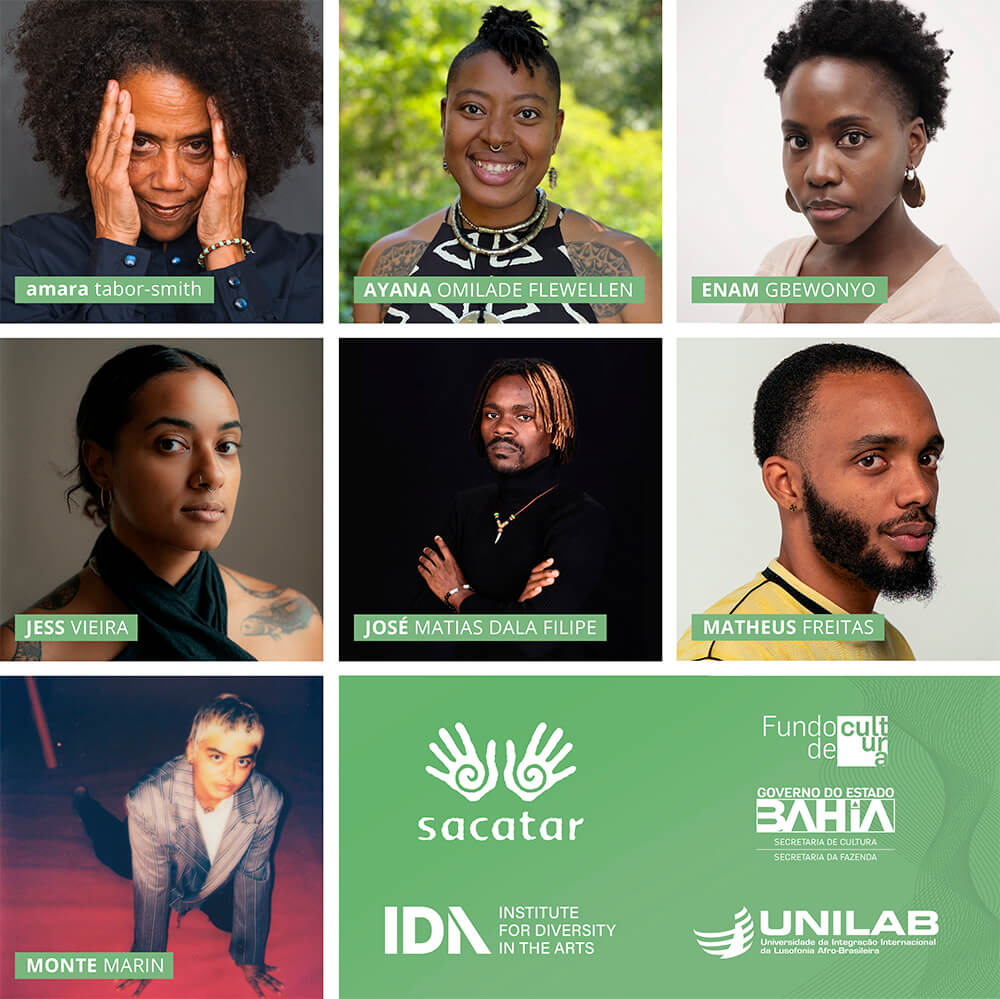
For the fourth consecutive year, Sacatar is partnering with Stanford University’s Institute for Diversity in the Arts (IDA) to host a residency session dedicated to exploring shared experiences of the African diaspora. This year’s group brings together artists based across the US and Bahia, whose lives and origins connect several territories of the diaspora. Their practices span choreography, archaeology, visual arts, film, and music. In this group setting, these artists will have the opportunity to examine how histories of the African diaspora shape contemporary cultural expression throughout the Americas.
amara tabor-smith‘s work in choreography and performance is grounded in Black, queer, and feminist principles. Her interdisciplinary, community-based practice draws on Yorubá Lukumí spiritual traditions to explore social justice, belonging, healing, and collective transformation.
A Black feminist archaeologist, artist-scholar, and Assistant Professor at Stanford University, Ayana Omilade Flewellen explores memory, slavery, and the African diaspora through archaeology, storytelling, and performance.
British-Ghanaian artist Enam Gbewonyo works across performance, film, installation, and sculpture. At Sacatar, she will research Afro-Brazilian women and Candomblé, developing work that combines knitting, embroidery, and performance.
Based in Salvador, visual artist Jess Vieira explores the intersections of memory, territory, and psychic landscapes through painting, writing, and art therapy. Jess Vieira’s residency is supported by SECULT-BA.
Angolan documentary filmmaker José Matias Dala Filipe joins this residency group through a collaboration between Sacatar, IDA/Stanford, and UNILAB (University for International Integration of the Afro-Brazilian Lusophony). His work combines social sciences, storytelling, and technology.
Across sculpture, jewelry-making, photography, and poetry, Matheus Freitas investigates memory, space, and historical violence. His practice draws on traditional knowledge from the Recôncavo Baiano region.
From New York, USA, Monte Marin works across sound, performance, video, and poetry as a vocalist, composer, and multimedia performance artist. Their interdisciplinary practice creates immersive spaces for queer communities and others living at the margins.
These artists will be in residence at Sacatar from July 13 to August 17, 2026.
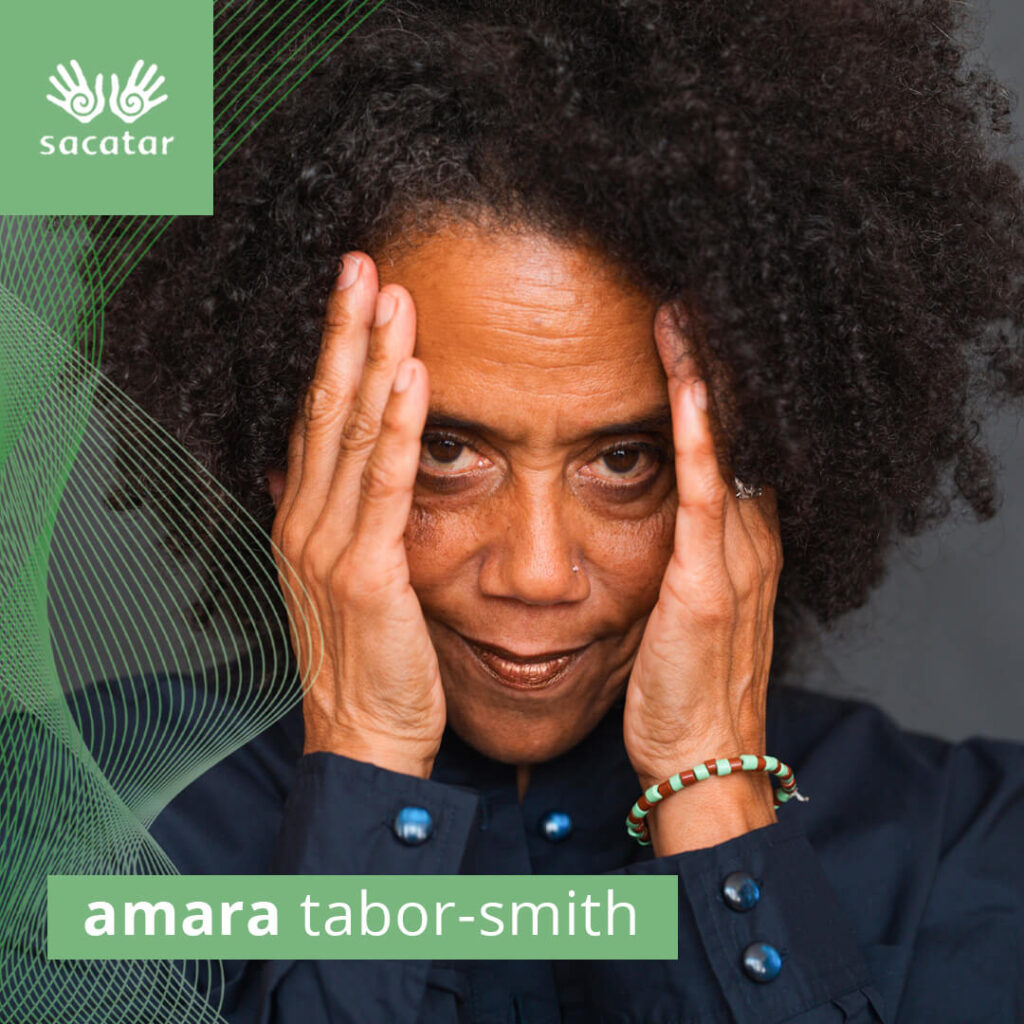
amara tabor-smith
Dance & Performance
USA
Sacatar + IDA/Stanford Partnership
amara tabor-smith (she/they) is a choreographer, performance maker, cultural worker, and Artistic Director of Deep Waters Dance Theater. Her interdisciplinary, site-responsive, and community-specific performance practice employs Yorubá Lukumí spiritual technologies to address issues of social and environmental justice, race, gender identity, and belonging. Her work is grounded in Black, queer, and feminist principles that emphasize liberation, joy, wholeness, and well-being. She currently serves as a Teaching Artist-in-Residence at Stanford University.
Through a collaborative approach, amara’s creative practice incorporates intergenerational dialogues, story circles, grief and rest rituals, and movement-based healing practices. By engaging audiences as active participants, she creates spaces where performers and audience members converge in mutual vulnerability, connection, and transformation.
During her residency at Sacatar, amara will focus on collecting stories of the Orixás as part of her ongoing research for a multi-year performance project titled “(may there be) Good Atmosphere Between Us: The Parables of Now.” This ritual-based work is grounded in community stories, collective rituals, and the retelling of African and African Diaspora Indigenous mythologies, biblical passages, and Black feminist invocations. This project is guided by the question, “How do we activate our collective ancestral wisdom and spirit to survive, adapt, and heal from climate catastrophe and global political chaos in the Anthropocene?”
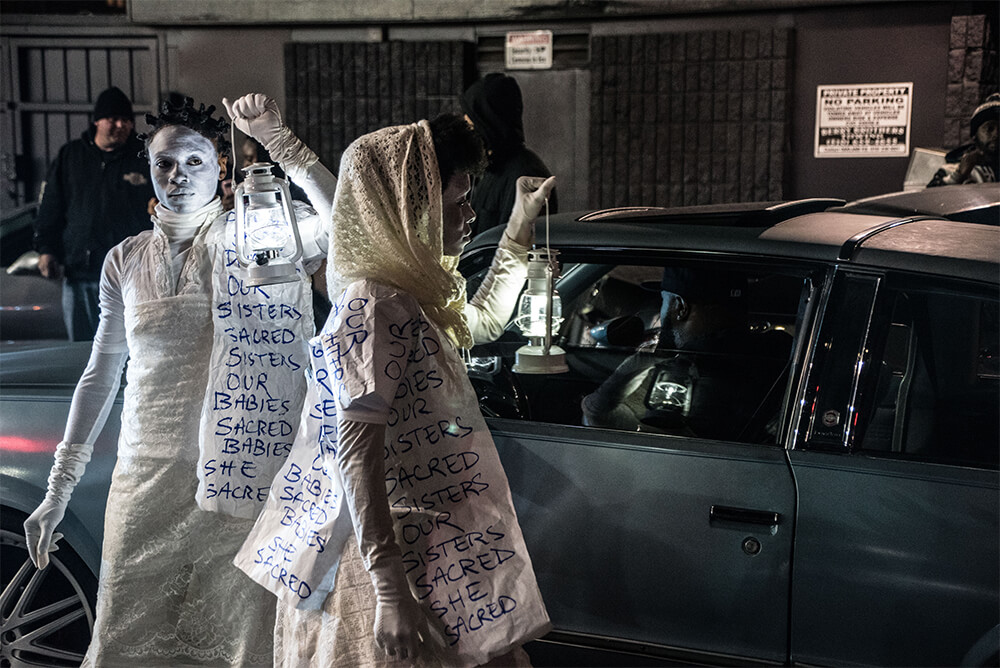
Photo by Robbie Sweeny.
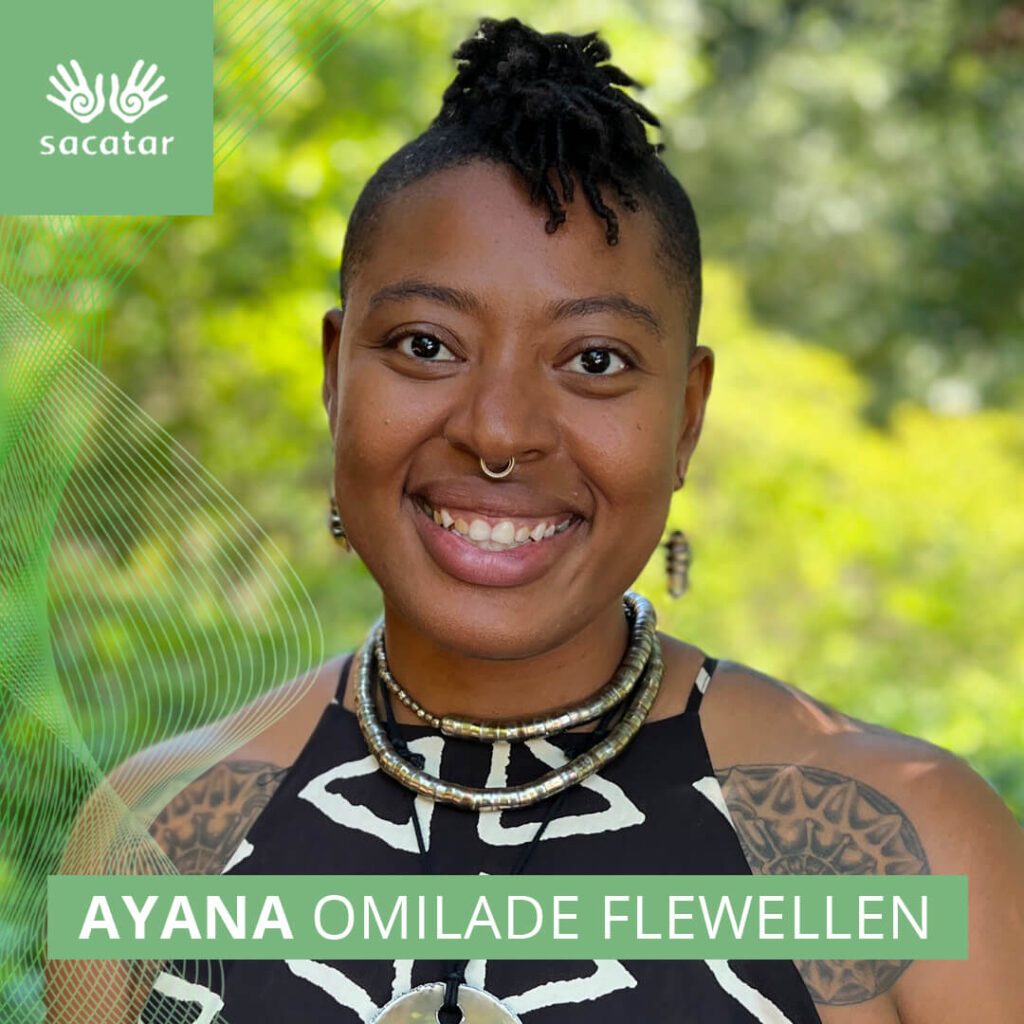
Ayana Omilade Flewellen
Literature & Performance
USA
Sacatar + IDA/Stanford Partnership
Ayana Omilade Flewellen (they/she) is a Black feminist archaeologist, artist-scholar, and storyteller. Flewellen is the co-founder of the Society of Black Archaeologists, serves on the Board of Diving With A Purpose, and is an Assistant Professor in the Department of Anthropology at Stanford University.
Ayana’s earlier works — adornments and small installations crafted from metal and stone — were rooted in the physicality of the ground. As her archaeological gaze has shifted seaward, so too has her creative practice, evolving into performance art that documents submerged and embodied practices of remembrance.
While at Sacatar, Ayana plans to write her second manuscript, Submergence in the Wake of Slavery: Material Histories and Embodied Memories of the Middle Passage. Drawing on underwater ethnographic and autoethnographic work with divers who excavate 16th–19th century vessels that carried enslaved Africans across the Atlantic, analysis of museum exhibits that use newly recovered artifacts to build immersive slave ship hull reconstructions on land, and an exploration of emerging artistic practices, the manuscript traces how the physical act of diving to these wreck sites creates new forms of embodied historical memory that reshape contemporary understandings of the Middle Passage.
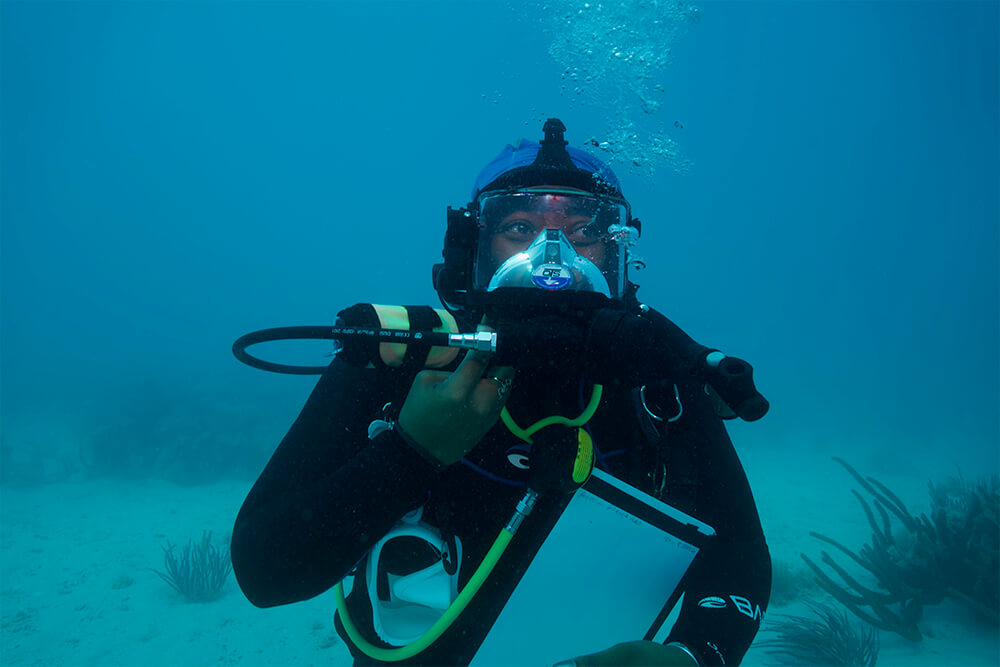
Photo by Kory Lambert.
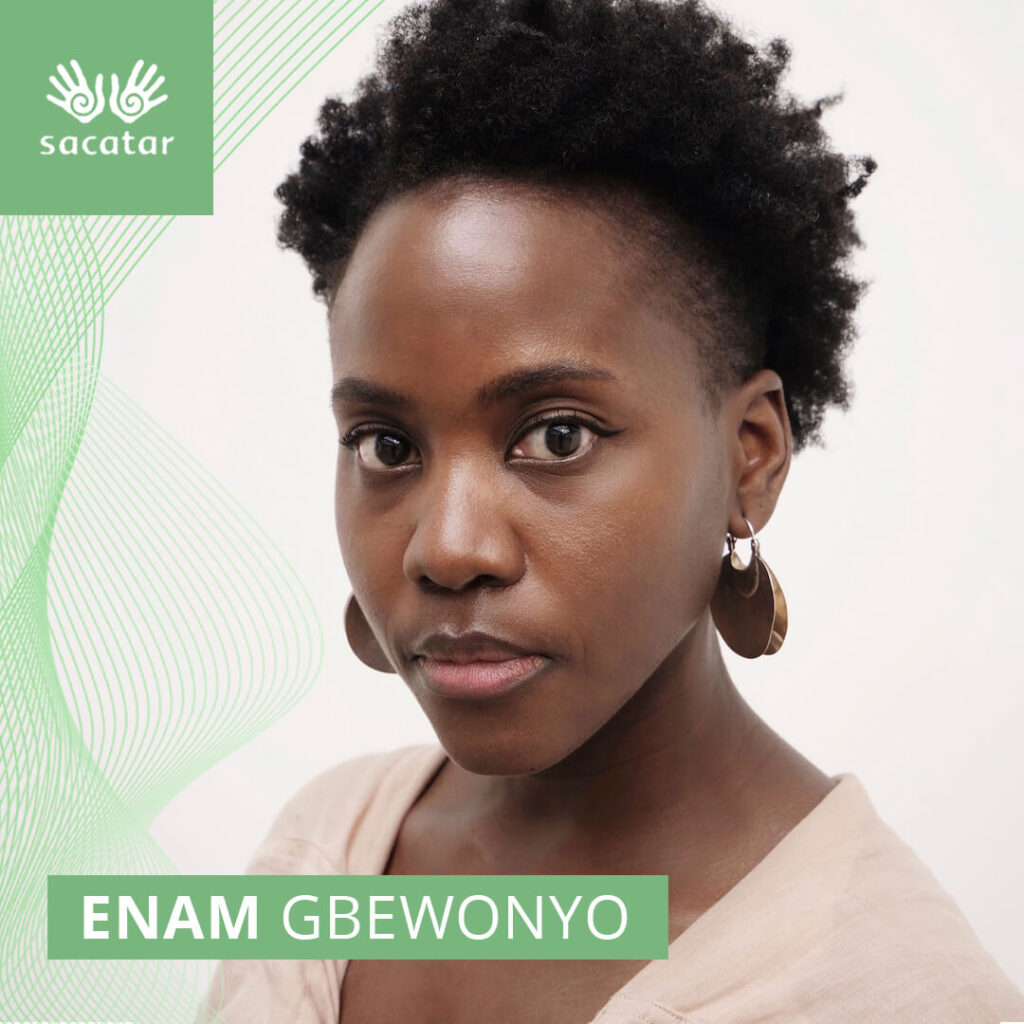
Enam Gbewonyo
Visual Arts
USA
Sacatar + IDA/Stanford Partnership
British-Ghanaian artist Enam Gbewonyo holds a BA in Textile Design from the University of Bradford, UK, and an MFA in Art Practice from Stanford University. She is represented by TAFETA Gallery in London and has exhibited internationally at institutions including Fondation H in Madagascar, the Bemis Center for Contemporary Arts in the US, Gagosian London (UK), and the 58th Venice Biennale (Italy).
Working across performance, film, installation, and sculpture, Enam’s practice imagines liberatory futures for the Black collective by reinterpreting ancestral African technologies through processes such as knitting, weaving, printmaking, and ceramics. Transforming these materials into surreal new forms, she creates works that function as corporeal entities: both containers for the trauma carried by Black bodies and vessels that transport them into cosmic realms of possibility.
During her residency at Sacatar, Enam will research traditional Barrafunda embroidery techniques. She also aims to develop a Dança Afro-inspired performance that celebrates and honors Black femininity and its capacities for survival, remembrance, connection, creation, regeneration, and divine expression.
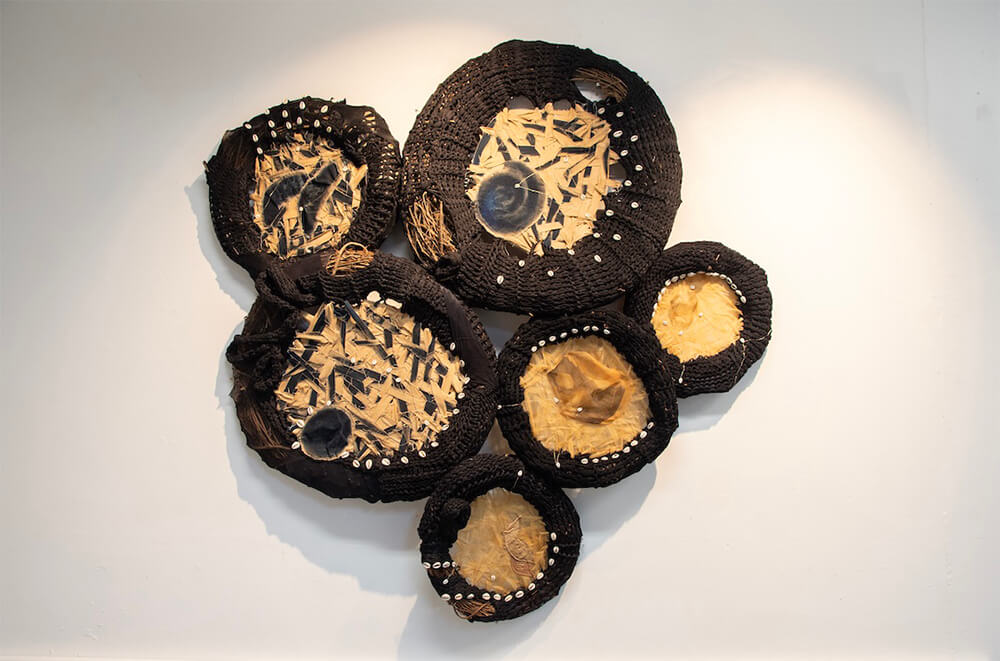
Size: 64 x 68 in.
Medium: used and new tights, cyanotype print on tea-stained cotton, tea-stained silk organza, digital print on tea-stained silk organza, willow wreaths, twigs, raffia, cowrie shells, tourmaline chips, real gold silk thread, and recycled PET thread.
Image credit: Nova Goode-Williams.

Jess Vieira
Visual Arts
Brazil
Sacatar + SECULT-BA Partnership
Born in the Cerrado region of Brasília (Brazil’s capital) and currently based in Salvador, Bahia, visual artist Jess Vieira is a painter who explores the intersection between lived territory and psychic realms. Her work revolves around the axis body-river-sea-red earth, translating memory into paintings that evoke both the mineral density of the earth and the fluidity of water. Her creative process is rooted in attentive observation and listening, resulting in canvases whose surfaces are sanded, rubbed, and layered to create texture and a sense of distance from polished, idealized forms.
Jess holds a degree in Literature and has specialized in Brazilian Studies (FESPSP) and Jungian Art Therapy (IJBA), fields that inform her ongoing research into symbolism and the amplification of psychic and cultural narratives. Lately, her work as an art therapist has expanded her practice through direct engagement with others, particularly women, integrating imagination, gesture, and collective exchange.
For her time at Sacatar, Jess will focus on her fascination with estuaries — dynamic sites of alchemy where river and sea converge. During the residency, she expects to trace an invisible thread between her roots in Brazil’s central plateau and the coastal territory of the residency, exploring encounters between geography, memory, and imagination.
Jess Vieira’s residency is supported by the Secretary of Culture of the State of Bahia (SECULT-BA) through the Apoio a Ações Continuadas do Fundo de Cultura da Secretaria de Cultura do Estado da Bahia.

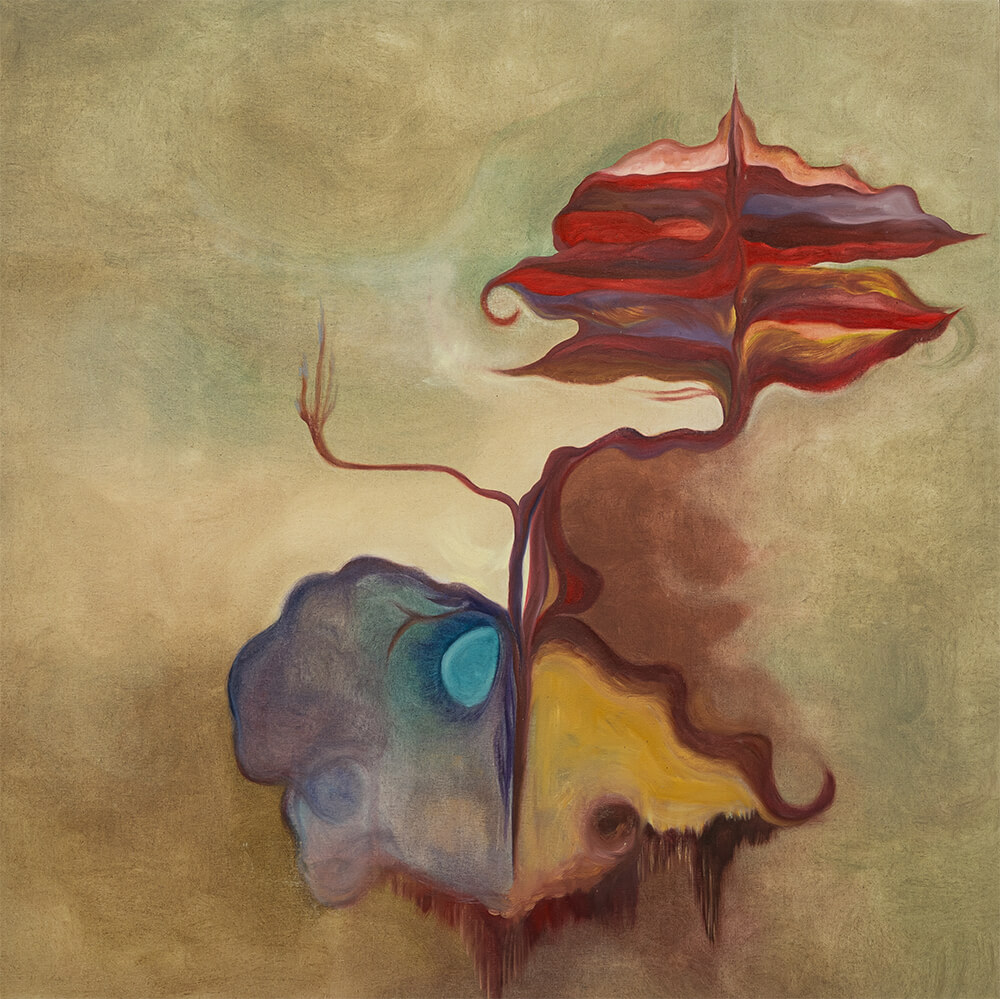
Oil on linen and cotton, 100 × 100 cm, 2025.
Photo by Renan Benedito.
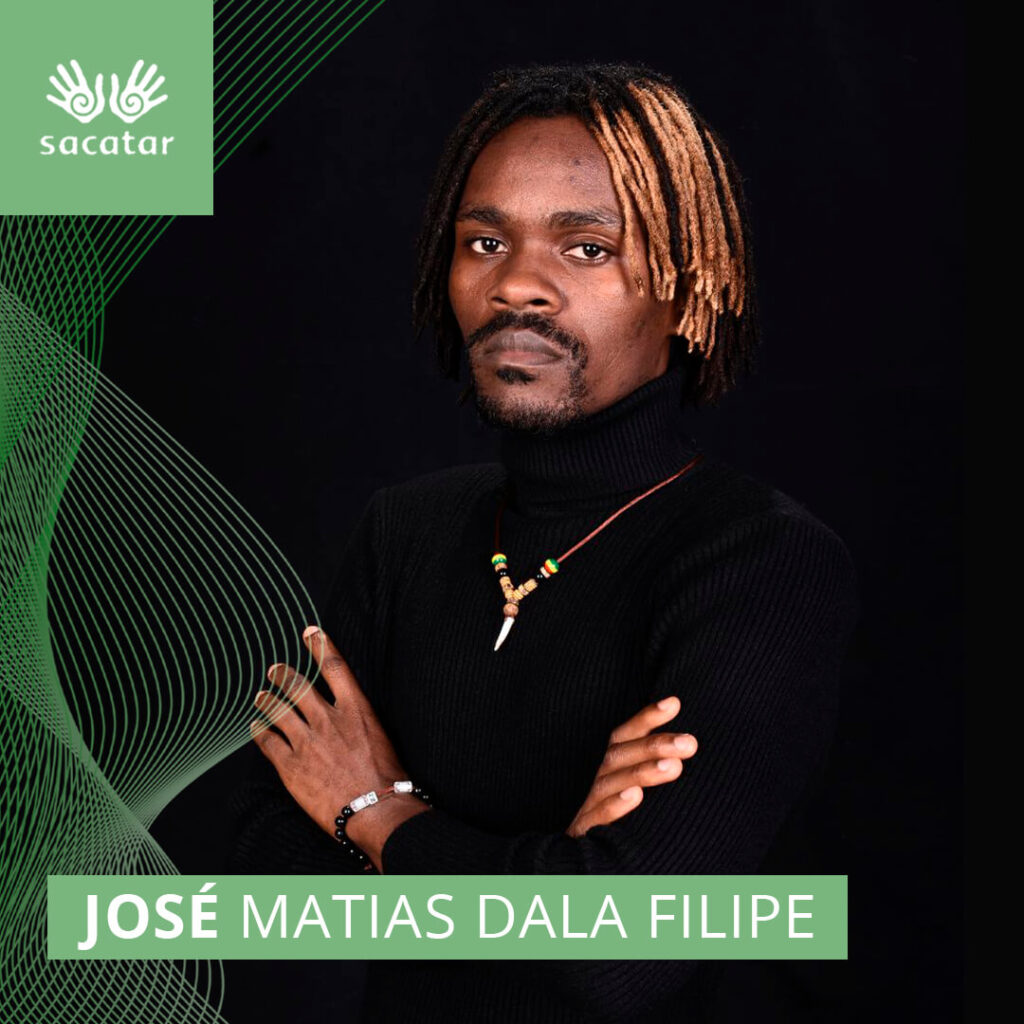
José Matias Dala Filipe
Moving Image
Angola
Sacatar + IDA/Stanford Partnership, in collaboration with UNILAB
José Matias Dala Filipe is an Angolan documentary filmmaker, whose work focuses on identity and territory. He holds a bachelor’s degree in Humanities from UNILAB, where he is currently pursuing a teaching degree in Social Sciences. José Matias is co-founder of TV Malês and creator of OBE TV. He is also a contributing author to the anthology Entre Fronteiras e Saberes.
Through his films, José Matias explores themes of identity, memory, territory, the African diaspora, and sociocultural experiences. His works blend documentary, reportage, and digital narratives as tools for documentation and social reflection, aimed at highlighting underrepresented stories and local knowledge. Drawing on his Social Sciences background, he combines research, new technologies, and experimental editing techniques to create works that connect art, education, and social transformation.
During his residency at Sacatar, Jose Matias aims to develop the documentary project “Pontes Diaspóricas: Diálogos entre Malês e Sacatar” (Diasporic Bridges: Dialogues between Malês and Sacatar). Approaching the residency as a living laboratory for research, he plans to interview other artists-in-residence and to document their creative processes. The project also seeks to highlight Sacatar’s role as a space for cultural exchange and for building bridges between academic research and diasporic cultures.
José Matias’ residency is the result of a new collaboration between Sacatar+IDA / Stanford and UNILAB (University for International Integration of the Afro-Brazilian Lusophony).
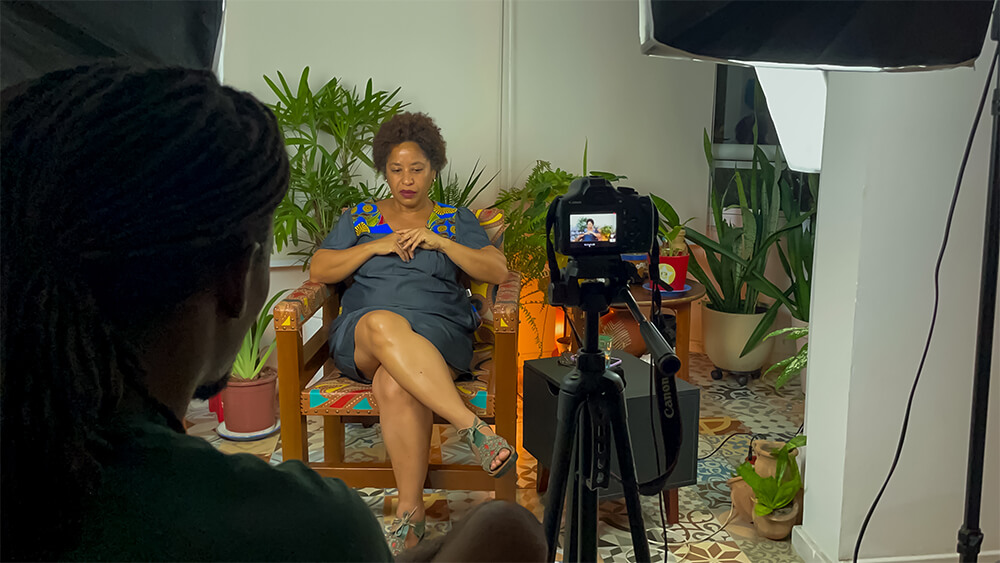
Photo by Pedro Kesongo (Dji Fox).
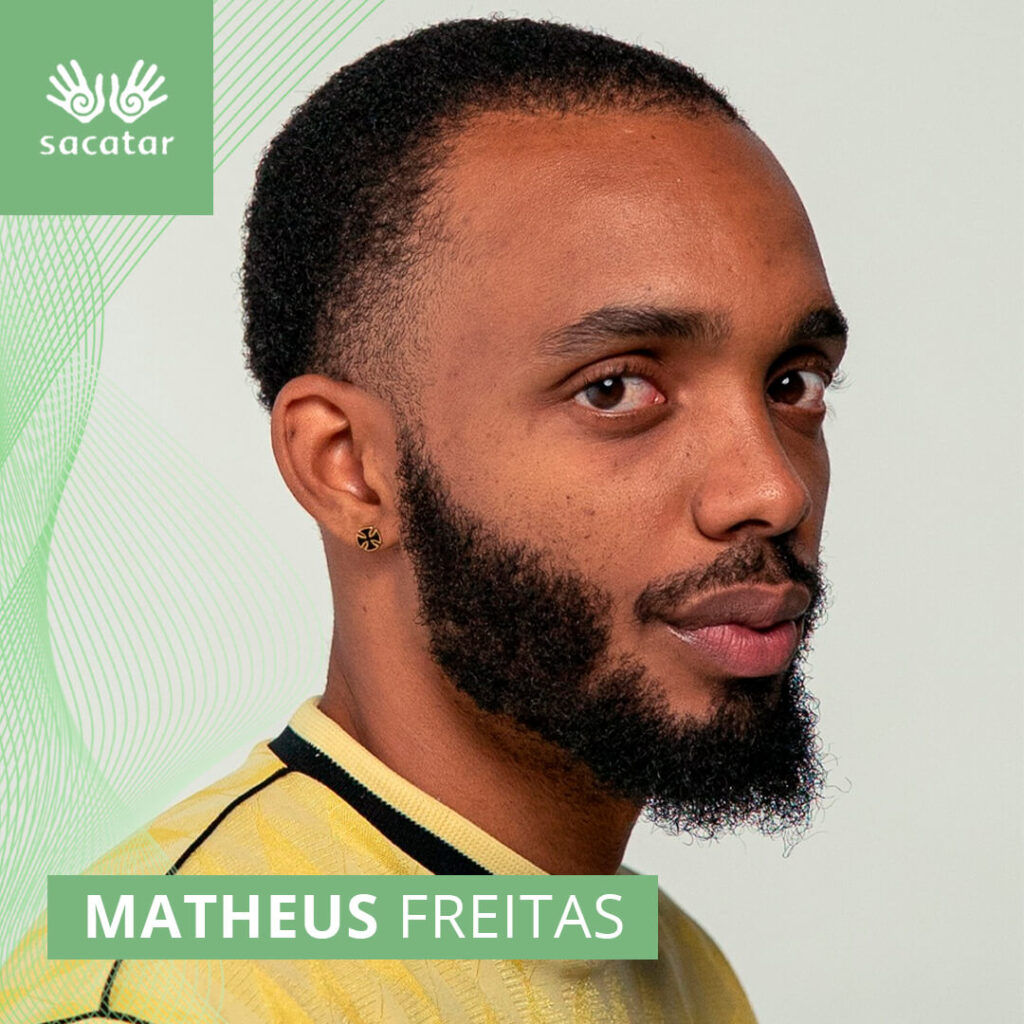
Matheus Freitas
Visual Arts
Brazil
Sacatar + IDA/Stanford Partnership
Matheus Freitas is a visual artist from Santo Amaro, Bahia, whose practice spans design, jewelry-making, sculpture, photography, and poetry. Working primarily with metal alloys, he draws upon the traditional knowledge of blacksmiths and jewelers from the Recôncavo Baiano region. His work explores the intersections of matter, memory, and space as a means of reflecting on historical violence and its enduring impact on the present. Through his artistic practice, Matheus has developed a unique methodology, which he has called “Vendo Formas” (“Seeing/Selling Forms”).
“Vendo Formas” serves as the foundation of Matheus’ practice. Rooted in the observation of symbols, structures, and recurring patterns in everyday life, he uses this methodology to create intuitive mappings that inform his sculptural process. In his work, transformation, time, and memory become integral components of the finished artworks.
During his residency at Sacatar, Matheus will delve into the context of the Island of Itaparica. He will be particularly attentive to how matter, time, and space influence each other on the island, while exploring processes of communication in dialogue with local knowledge and the ancestral practices of the island’s traditional communities.
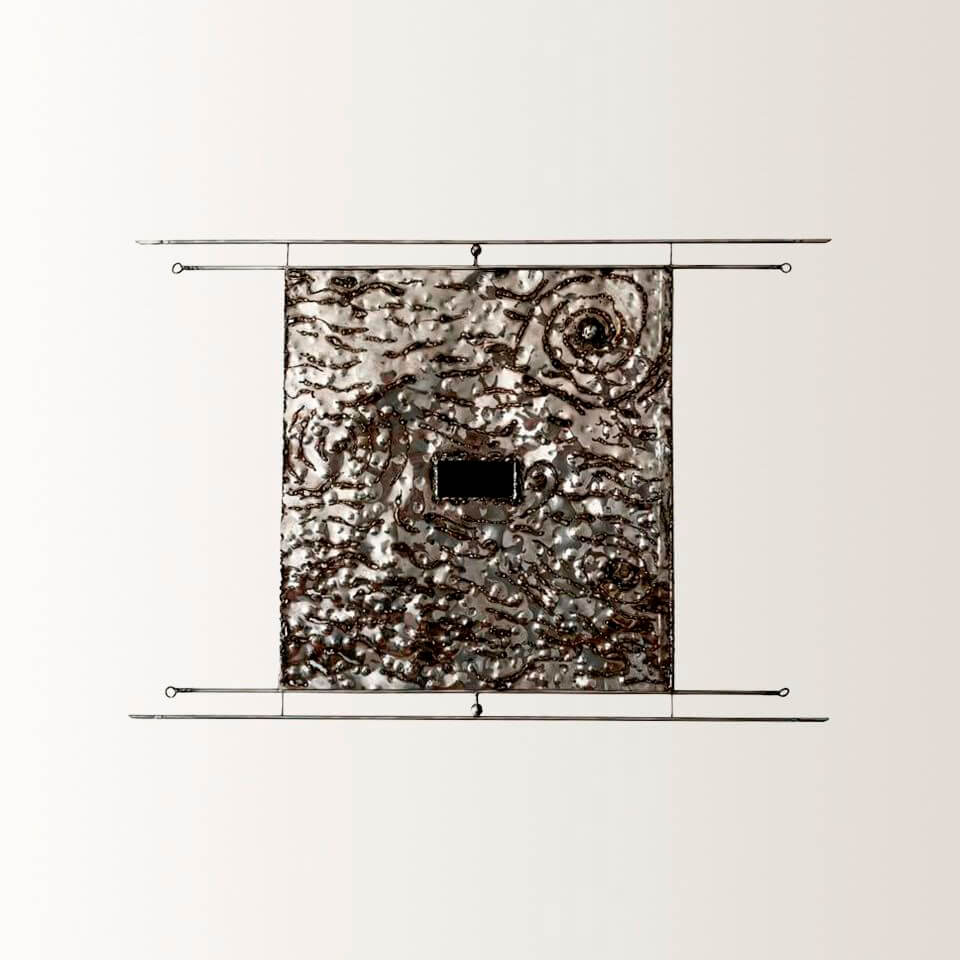
Stainless steel, welding lens. Cutting, welding, and hand setting. 70 × 100 × 3 cm.
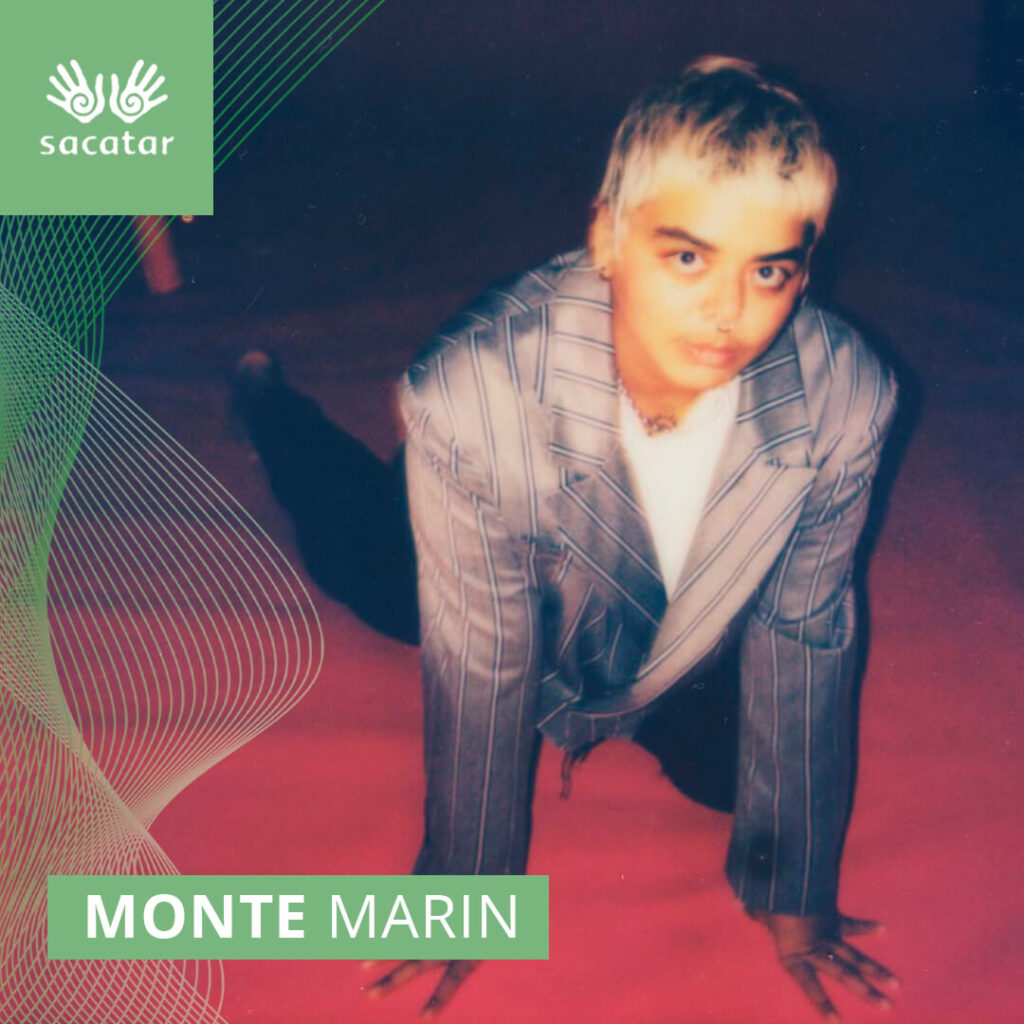
Monte Marin
Multidisciplinary Arts
USA
Sacatar + IDA/Stanford Partnership
Monte Marin (they/he) is a genderless/genreless vocalist, composer, multimedia performance artist, and cultural worker born and raised in New York, USA, to Colombian immigrant parents. Their experimental performance film Born With An Extra Rib received the 2022 Queer|Art Recent Work Prize, a Jury Award at the 2023 TRANSlations Seattle Film Festival, and Best Experimental Short at the 2025 QueerCine International Film Festival. Monte is currently pursuing an MFA in Art Practice at Stanford University.
Working across sound, music, composition, performance, video, and poetry, Monte’s artistic process aims to create worlds that position the body as a site of liberation, offering spaces of reflection and belonging for those who exist at the margins, including queer communities, displaced peoples, and future generations of diasporic artists.
During their residency at Sacatar, they will draw upon land, spirituality, and community-based cultural organizing to develop a collection of queer and trans scriptures. Grounded in an ongoing research into grief, gathering, and trans divinity, the project will explore the fluid relationships between land, spirit, and the trans body. Through texts, poems, prompts, and musical and sonic compositions, Monte will create devotional works that investigate transformation, connection, and collective belonging.
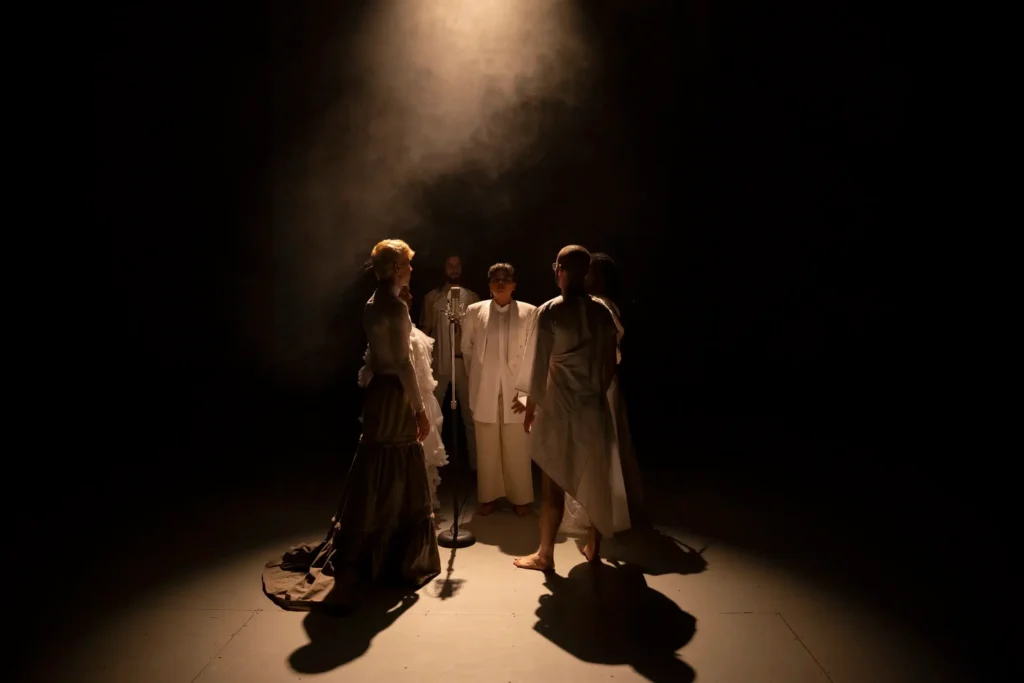
photo by Maria Baranova, 2021.